
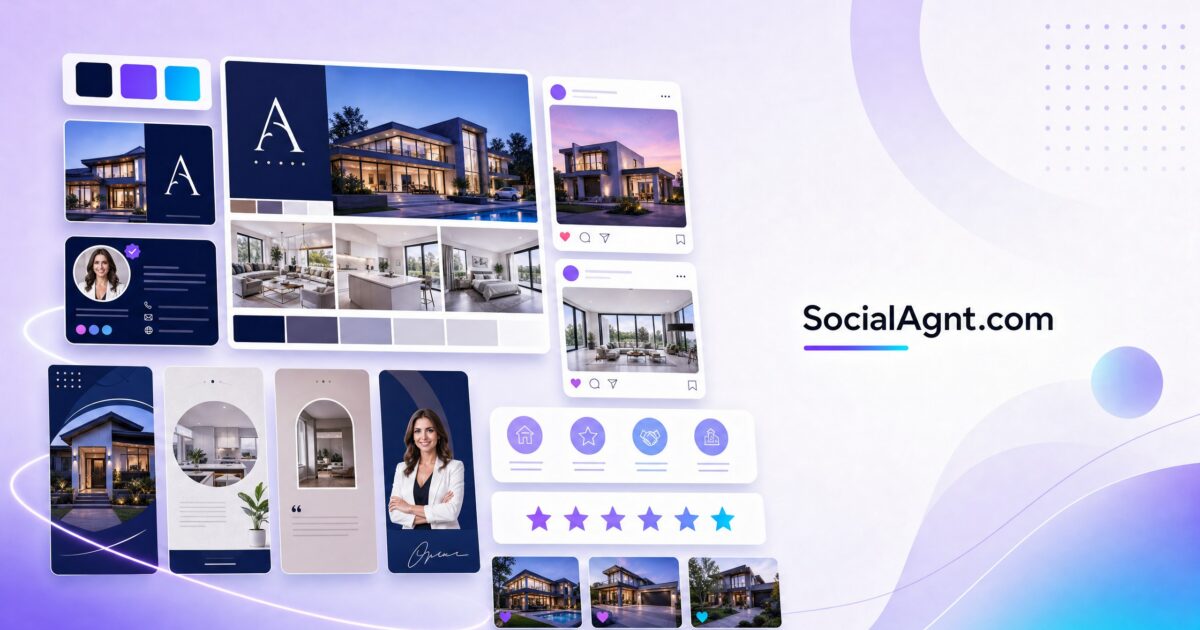
Key Takeaways: The best way to understand what makes a real estate brand effective is to study agents and teams who are doing it exceptionally well. Great real estate brands share common principles — clarity of positioning, visual consistency, authentic storytelling, and distinctive differentiation — but they express those principles in wildly different ways depending on their market, audience, and personal strengths. Some build luxury empires anchored in sophistication and exclusivity. Others build community-centered brands that feel like your knowledgeable neighbor. Others leverage technology-forward positioning that appeals to modern, digitally native buyers. Studying these diverse approaches reveals a critical truth: there’s no single “right” way to brand a real estate business. The right brand is one that authentically reflects who you are, resonates with the specific audience you want to serve, and differentiates you clearly from every other agent competing for the same attention. This guide profiles ten real estate branding archetypes — each illustrated with the strategies, visual approaches, and positioning techniques that make them work — so you can identify the branding direction that fits your personality, market, and business goals.
What Makes a Real Estate Brand “Work”
The Four Pillars of Effective Branding
Before examining specific examples, it’s worth understanding the universal principles that effective real estate brands share. First, clarity — the brand communicates who it serves and what value it provides within seconds. Second, consistency — every touchpoint (website, social media, business cards, signage, email) looks, sounds, and feels like it comes from the same source. Third, authenticity — the brand reflects the real personality, values, and strengths of the agent rather than an artificial persona. Fourth, differentiation — the brand is distinguishably different from competitors in a way that matters to the target audience. Brands that nail all four pillars build recognition and trust; brands that miss even one struggle to gain traction.
Design Trends Shaping Real Estate Brands in 2026
Current design trends in real estate branding favor quieter, more sophisticated aesthetics over the bold, loud designs of previous years. Charcoal, white, and soft metallic color palettes have replaced the bright blues and reds that dominated the industry for decades. Clean typography with generous white space signals modern professionalism. Photography has shifted toward authentic, lifestyle-oriented imagery rather than formal posed headshots. These trends reflect a broader cultural shift toward understated quality — and the brands that align with these preferences feel current and intentional rather than dated or generic.
Archetype 1: The Luxury Authority
Luxury real estate brands communicate exclusivity, sophistication, and an elevated client experience through every visual and verbal choice. Their color palettes lean toward black, white, gold, and deep navy — colors that signal premium quality. Typography is elegant and minimal, often featuring serif fonts that convey tradition and gravitas. Photography showcases architectural details, dramatic lighting, and aspirational lifestyle imagery. Their brand voice is polished and confident — never casual or folksy — with language that positions properties as investments and lifestyle statements rather than mere housing.
What makes this archetype work: luxury brands succeed because they attract clients who equate presentation quality with service quality. A seller with a $3 million property wants an agent whose brand communicates that they understand (and can market to) the high-end buyer. The investment in premium brand design signals: “I will market your property at the level it deserves.”
Key takeaway: if you operate in luxury markets, your brand quality must match the price points you represent. Every element — from your business card stock to your social media grid aesthetic — is evaluated by discerning clients who notice details.
Archetype 2: The Community Connector
Community-focused brands position the agent as the neighborhood expert and local champion. Their visual identity features warm, inviting colors — earthy tones, soft greens, warm neutrals — that feel approachable and friendly. Photography highlights local landmarks, community events, neighborhood streets, and real moments with real people. Their content strategy emphasizes local knowledge: restaurant recommendations, school district insights, community event coverage, and neighborhood history. Their brand voice is conversational, knowledgeable, and genuinely enthusiastic about the area they serve.
What makes this archetype work: community brands attract clients who prioritize local expertise and personal connection. Buyers relocating to a new area want an agent who loves the community and can guide them to the right neighborhood. Sellers want an agent whose local network and neighborhood knowledge drives buyer traffic. The community connector builds referrals organically because their brand is intertwined with the community itself.
Key takeaway: community branding requires genuine engagement — you can’t fake neighborhood expertise. The agents who succeed with this archetype truly know and love their area, and that authenticity comes through in every piece of content.
Archetype 3: The Data-Driven Strategist
Data-driven brands position the agent as the analytical expert who makes smarter decisions through market intelligence. Their visual identity tends toward clean, modern design — structured layouts, infographic-style content, and data visualization that communicates competence and precision. Their color palettes often feature blues (trust, intelligence) paired with crisp whites and sharp accent colors. Content focuses on market statistics, pricing analysis, trend reports, and investment insights. Their brand voice is authoritative, specific, and evidence-based — backing every recommendation with data.
What makes this archetype work: in a market where pricing decisions involve hundreds of thousands of dollars, clients who value analytical rigor gravitate toward agents who demonstrate it through their brand. The data-driven strategist appeals to logical, research-oriented buyers and sellers who want an agent who will optimize their financial outcome rather than rely on intuition alone.
Key takeaway: data-driven branding requires actually producing data-driven content. Regular market reports, pricing analyses, and trend commentary are the content that validates this positioning.
SocialAgnt’s AI adapts to your unique brand voice — whether luxury, community, data-driven, or lifestyle — creating consistent content across Instagram, Facebook, TikTok, LinkedIn, YouTube, and Google Business Profile. Start your free account today.
Archetype 4: The Tech-Forward Innovator
Tech-forward brands position the agent as an early adopter who leverages cutting-edge tools to deliver superior results. Their visual identity features modern, minimalist design with tech-inspired elements — gradient colors, geometric patterns, and dynamic layouts. Content showcases virtual tours, drone photography, 3D property models, smart home features, and digital marketing capabilities. Their brand voice is forward-thinking, enthusiastic about innovation, and focused on the client experience advantages that technology enables.
What makes this archetype work: millennial and Gen Z buyers who live in a digital world expect their agent to operate in one too. The tech-forward brand attracts clients who value innovation and want an agent who uses every available tool to find, market, and sell properties more effectively than traditional agents.
Archetype 5: The Lifestyle Curator
Lifestyle brands transcend real estate transactions to sell a way of living. Their visual identity is aspirational — beautiful imagery of homes, interiors, outdoor spaces, dining, travel, and daily living that creates an emotional desire. Content blends real estate with lifestyle: interior design inspiration, home entertaining ideas, local dining guides, wellness spaces, and the art of creating a home (not just buying a house). Their brand voice is inspiring, curated, and aesthetically attuned.
What makes this archetype work: lifestyle brands attract clients who see their home as an expression of their identity. These buyers and sellers respond to visual beauty and emotional resonance more than data or credentials. The lifestyle curator builds a following that extends beyond active buyers and sellers — creating a larger audience that generates referrals and long-term brand equity.
Archetype 6: The First-Time Buyer Champion
First-time buyer brands position the agent as the patient, educational guide for people entering the real estate market for the first time. Their visual identity is bright, approachable, and demystifying — friendly colors, accessible design, and welcoming imagery that doesn’t intimidate. Content is heavily educational: step-by-step process guides, myth-busting posts, financial literacy tips, and reassuring messaging about common fears. Their brand voice is encouraging, patient, and jargon-free.
What makes this archetype work: first-time buyers are overwhelmed and looking for an agent who will explain things clearly without making them feel ignorant. The champion brand directly addresses their anxiety and positions the agent as a trusted mentor. This niche also generates strong referral chains — first-time buyers who have a great experience recommend their agent to every friend who follows them into homeownership.
Archetype 7: The Investment Specialist
Investment-focused brands target real estate investors, landlords, and wealth builders. Their visual identity is professional and business-oriented — clean design, financial imagery, and data-forward presentations. Content centers on ROI analysis, market opportunity identification, portfolio strategy, tax implications, and investment case studies. Their brand voice is analytical, strategic, and focused on financial outcomes.
What makes this archetype work: investors evaluate agents as business partners, not just service providers. A brand that speaks the language of investment — returns, cap rates, cash flow, appreciation — immediately signals that the agent understands the investor’s priorities. This specialization generates repeat business because investors transact repeatedly, making one client worth multiple transactions over years.
Archetype 8: The Eco-Conscious Specialist
Sustainability-focused brands serve clients who prioritize environmental values in their housing decisions. Their visual identity features natural colors (greens, earth tones, organic textures), eco-friendly imagery, and design that reflects environmental consciousness. Content highlights energy-efficient homes, sustainable building features, green certifications, eco-friendly neighborhoods, and the intersection of real estate with environmental responsibility. Their brand voice is informed, passionate, and values-aligned.
What makes this archetype work: the growing segment of environmentally conscious buyers actively seeks agents who share and understand their values. An eco-specialist brand attracts a loyal, values-driven clientele and differentiates clearly in a market where few agents have claimed this positioning.
Archetype 9: The Relocation Expert
Relocation brands serve people moving to a new city — often from across the country or internationally. Their visual identity welcomes and orientates: area photography, map-style graphics, comparison content, and “welcome to [city]” messaging. Content focuses on area guides, neighborhood comparisons, cost-of-living information, local culture primers, and the logistical aspects of long-distance moves. Their brand voice is informative, reassuring, and enthusiastically welcoming.
What makes this archetype work: relocating buyers have acute information needs that local buyers don’t — they need an agent who can be their expert guide to an unfamiliar market. The relocation brand directly addresses this need and attracts clients who may have higher transaction values (corporate relocations, equity from selling in expensive markets) and strong referral potential (corporate relocation networks).
Archetype 10: The Personal Brand Powerhouse
Personality-driven brands are built entirely around the agent’s individual charisma, expertise, and public presence. These agents are content creators as much as real estate professionals — building large followings through entertaining, educational, or inspiring video content. Their visual identity is centered on their personal image: their face, their style, their energy. Content is personality-forward: talking-head videos, behind-the-scenes vlogs, opinion pieces, and storytelling. Their brand voice is distinctively their own — unmistakable and memorable.
What makes this archetype work: personal brands generate the strongest emotional connections because people feel like they know the agent personally. The agents who build successful personal brands attract clients who choose them specifically — not because of their brokerage, their market data, or their listing inventory, but because of who they are. This archetype requires comfort with consistent content creation and public visibility, but generates extraordinary loyalty and referral rates for agents who embrace it.
Finding Your Brand Archetype
You don’t need to fit perfectly into one archetype — many successful brands blend elements from two or three. A community connector who’s also data-driven. A lifestyle curator who specializes in luxury. A first-time buyer champion who’s tech-forward. The key is choosing a primary archetype that aligns with your genuine strengths, your target audience’s preferences, and your market’s opportunities — then expressing it with consistency and authenticity across every touchpoint.
Study the brands that resonate with you, identify the principles behind their effectiveness, and adapt those principles to your own unique positioning. Your brand doesn’t need to look like anyone else’s — it needs to look unmistakably like you. Build that brand with consistent, platform-optimized content from SocialAgnt — AI-powered captions and scheduling across Instagram, Facebook, TikTok, LinkedIn, YouTube, and Google Business Profile that reinforce your brand identity with every post.
SocialAgnt creates content that matches your brand archetype — from luxury to community to data-driven — with AI that adapts to your voice. Schedule across every platform from one dashboard. Start free today.
Ready to save 5+ hours per week on social media?
SocialAgnt helps real estate agents schedule posts, create AI content, and grow their brand across 7 platforms. Try it free for 14 days.
