
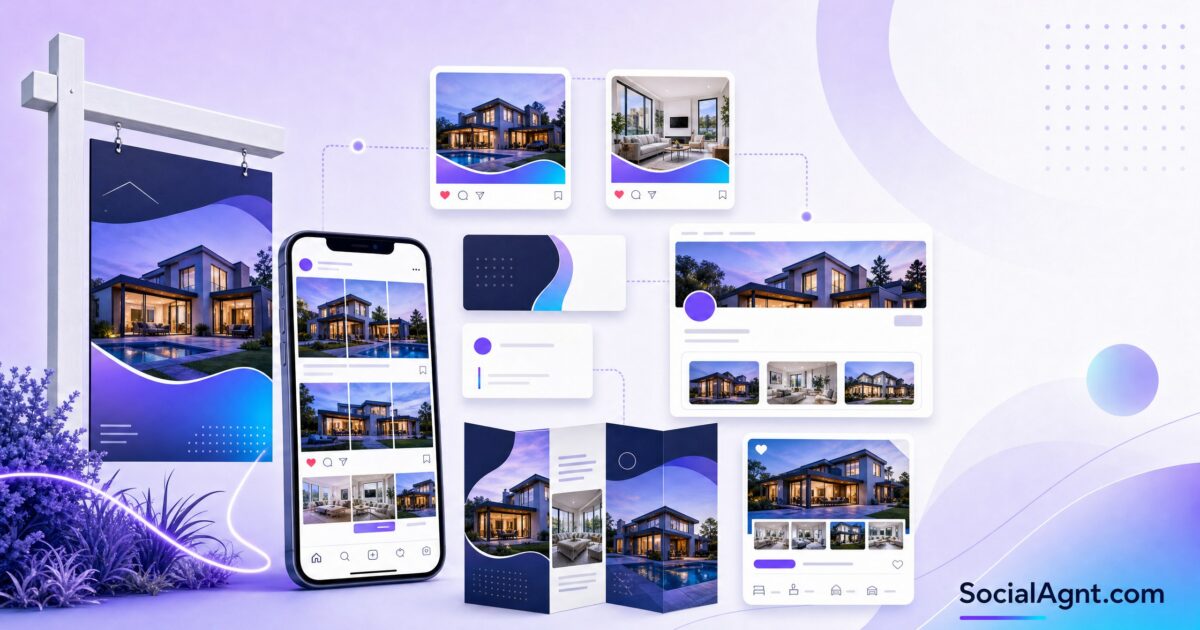
Key Takeaways: Brand consistency — the practice of presenting a unified visual identity, message, and client experience across every touchpoint — is one of the most powerful yet underutilized competitive advantages in real estate. The numbers make the case clearly: consistent brand presentation can make your business up to 3.5 times more visible, generate up to 23 percent more revenue, and increase brand recognition by as much as 80 percent. Yet most real estate agents are unknowingly inconsistent — using one color palette on their website, a different look on social media, a third design language on their yard signs, and a completely disconnected style in their email marketing. The result is a fragmented brand that potential clients can’t recognize, remember, or trust. This guide covers every dimension of real estate brand consistency: the visual, verbal, and experiential elements that need to align, the specific online and offline touchpoints where consistency matters most, the common places where branding breaks down, and the systems and tools that make consistency sustainable without consuming your entire workday.
Why Brand Consistency Drives Real Estate Success
Real estate is a relationship business, and relationships are built on trust. Brand consistency is one of the most direct ways to build trust at scale because it signals reliability, professionalism, and attention to detail — three qualities that every buyer and seller looks for in an agent.
Think about it from a client’s perspective. When they encounter your brand — on a yard sign, a Facebook ad, a Google search result, and then your website — they’re subconsciously checking whether all of these experiences feel like they belong to the same person. If they do, the client’s brain registers reliability. If they don’t, it registers uncertainty. And uncertainty is the enemy of every real estate transaction.
The Numbers Behind Consistency
Research consistently supports what intuition suggests. Brands with consistent presentation become 3.5 times more visible than those with inconsistent branding. Sixty-eight percent of organizations report that brand consistency contributes at least 10 percent to revenue growth, and a third of businesses report it boosts revenue by 20 percent or more. In real estate specifically, 68 percent of homebuyers and sellers say they value consistent, authentic communication from their agents above all other marketing factors.
Perhaps the most compelling statistic is the loyalty gap identified by the National Association of Realtors: 89 percent of homebuyers say they’d recommend their agent, yet agents only earn 16 percent of business from repeat clients and 20 percent through referrals. That massive gap between satisfaction and actual repeat business suggests that most agents fail to stay top-of-mind after the transaction closes. Consistent branding — the kind that makes you recognizable and memorable across every channel — is the bridge that closes that gap.
The Compound Effect of Consistency
Brand consistency isn’t a switch you flip — it’s a compound investment. Research suggests that consumers need six to twelve months of consistent visual and messaging exposure before they reliably recognize your marketing. By year two or three, consistency becomes a noticeable competitive advantage as your brand recognition compounds while inconsistent competitors remain invisible.
This matters because real estate has long sales cycles. A homeowner who sees your consistent branding today might not sell for three to five years. An aspiring buyer might be 18 months away from their first purchase. The agents who win those future transactions are the ones whose brand was consistent and recognizable enough to be remembered when the moment arrived.
The Four Pillars of Brand Consistency
True brand consistency extends far beyond using the same logo everywhere. It encompasses four interconnected dimensions that must align across every touchpoint.
Visual Consistency
Visual consistency is what most agents think of first, and it’s the most immediately noticeable. It includes your logo (with approved variations for different contexts), your color palette (primary, secondary, and accent colors with documented HEX, RGB, CMYK, and Pantone values), your typography (headline and body fonts with consistent sizing), your photography style (composition, lighting, editing treatment), and your design templates (layouts for recurring marketing pieces).
At minimum, every real estate brand needs one logo with black, white, and color variations, two to three primary brand colors with exact codes, one to two designated headline and body fonts, one professional headshot used across all platforms, and layout templates for the most common content types. Without these foundational elements documented and accessible, visual consistency is virtually impossible to maintain.
Verbal Consistency
Your brand voice — the way you communicate in writing and in person — needs to be as consistent as your visual identity. A brand that sounds warm and conversational on Instagram but formal and corporate on its website creates the same cognitive dissonance as mismatched colors. Clients can’t get a clear sense of who you are if your tone changes depending on where they encounter you.
Define your brand voice with specific descriptors. Are you warm and approachable, or authoritative and data-driven? Are you casual and relatable, or polished and professional? There’s no wrong answer — but there is a wrong answer for your specific target market, and inconsistency between platforms suggests you don’t know who you are.
Experiential Consistency
The client experience — from initial inquiry through closing and beyond — is a branding touchpoint that many agents overlook. How you respond to inquiries, how you structure showings, how you communicate during negotiations, and how you follow up after closing all contribute to your brand. If your marketing promises a white-glove, high-touch experience but your actual service feels transactional and rushed, the inconsistency will cost you referrals regardless of how polished your visual brand looks.
Strategic Consistency
Your positioning — who you serve, what you specialize in, and what makes you different — should be consistent across every channel and conversation. If your website says you specialize in luxury properties but your social media is full of starter-home content, clients in both segments will question whether you’re the right fit. Pick your lane and reinforce it everywhere.
Online Brand Consistency: Where Digital Presence Lives
Your online presence is often the first — and sometimes the only — place potential clients encounter your brand before deciding whether to contact you. Consistency across digital touchpoints is non-negotiable.
Your Website
Your website is your brand’s home base and the standard against which all other touchpoints should be measured. Every page should reflect your brand colors, typography, photography style, and voice. Navigation should feel intentional. Your bio, headshot, and value proposition should be immediately visible. If a client visits your website and then encounters any other piece of your marketing, the experience should feel seamlessly connected.
Pay particular attention to your listing pages. Many agents use IDX feeds that default to generic styling, creating a visual disconnect between their branded pages and their property listings. Customize your IDX display to match your brand whenever possible — it’s one of the most-visited sections of any agent website and a frequent source of brand inconsistency.
Social Media Profiles
Instagram, Facebook, LinkedIn, and any other platforms you use should feel like extensions of the same brand. This means consistent profile photos (use the same professional headshot everywhere), consistent cover images, consistent color palettes in your post templates, and a consistent voice in your captions and comments.
One of the most common places brand consistency breaks down is social media content creation. Agents grab free templates from different sources, use varying filters on photos, and write in different tones depending on their mood. The result is a feed that looks like it was created by five different people. Using a consistent set of branded templates — or a tool like SocialAgnt that automatically applies your brand elements to generated content — eliminates this problem.
Email Marketing
Your email templates should use the same colors, fonts, and logo placement as your website and social media. The tone of your emails should match your brand voice. Market updates should feel like they come from the same person who posts on Instagram and presents at listing appointments. Many agents use their brokerage’s default email templates, which may not align with their personal brand — investing time in custom-branded email templates pays dividends in recognition and professionalism.
Online Listing Portals
Zillow, Realtor.com, Homes.com, and other portals offer limited visual customization, but the elements you can control — your headshot, bio, and listing descriptions — should be consistent with the rest of your brand. If your website bio positions you as a luxury specialist but your Zillow bio reads like a generic agent description, you’re sending mixed signals to prospects who research you across multiple platforms.
SocialAgnt Keeps Your Brand Consistent Automatically
Maintaining brand consistency across social media is one of the biggest challenges agents face — especially when you’re posting multiple times per week across multiple platforms. SocialAgnt solves this by applying your brand colors, voice, and style to every AI-generated post, ensuring your Instagram, Facebook, and LinkedIn presence always looks and sounds like you. No more mismatched templates or off-brand content. Start your free trial →
Offline Brand Consistency: Where the Physical World Meets Your Brand
In real estate, offline branding is uniquely important because so much of the business happens in physical spaces — neighborhoods, open houses, client meetings, and community events. Your offline materials need to be just as consistent as your digital presence.
Yard Signs and Property Signage
Yard signs are arguably the most visible offline branding element for any real estate agent. They sit in neighborhoods for weeks or months, seen by hundreds of people daily. Your sign should prominently display your logo, brand colors, professional photo, and contact information in a design that’s instantly recognizable from a moving car. “For Sale,” “Under Contract,” and “Sold” riders should all follow the same design language. If your yard signs look different from your other marketing, you’re missing the repetition that builds recognition.
Business Cards
Business cards remain one of the most exchanged marketing pieces in real estate. They should be an extension of your broader brand — same colors, same fonts, same headshot, same design sensibility. A business card that doesn’t match your website or social media creates a disconnect at precisely the moment when personal and digital branding should reinforce each other. Keep cards on hand at all times — every networking event, every community gathering, every casual conversation that turns into a real estate discussion is a branding opportunity.
Flyers, Brochures, and Listing Materials
Property flyers, neighborhood guides, market reports, and listing presentations should all draw from the same branded template system. The layout, typography, color palette, and photography style should be consistent across every printed piece. When a seller reviews your listing presentation and later sees your property flyer at an open house, the visual connection should be immediate and seamless.
Open House Materials
Open houses are immersive brand experiences. Directional signs, welcome signage, property information sheets, feedback forms, and even the way you stage a sign-in table should all reflect your brand. The agent who shows up with branded materials that match their yard sign, website, and social media creates a polished impression that generic or mismatched materials can’t achieve.
Vehicle Branding
For agents who invest in vehicle wraps or car magnets, the design should be treated as an extension of your broader brand system — not a standalone creative project. Your vehicle branding should use the same colors, logo, headshot, and design language as everything else. A vehicle wrap that doesn’t match your yard signs defeats the purpose of mobile advertising, which is to build recognition through repeated neighborhood visibility.
Where Real Estate Branding Typically Breaks Down
Understanding the most common failure points helps you prevent them. Here are the specific places where brand consistency most often falls apart for real estate agents.
Cross-Platform Template Chaos
Agents frequently source templates from multiple places — a few from Canva, some from their brokerage, others from free downloads, and occasionally custom designs from different freelancers at different times. Each source introduces slightly different design elements, colors, and styles. Over months, the result is a patchwork brand that looks different everywhere. The fix is committing to one template system or brand management platform and using it for everything.
The Print-Digital Divide
Colors that look perfect on screen often print differently. An agent whose website uses a specific shade of navy might end up with yard signs in a slightly different blue, business cards in another shade, and flyers in yet another. This happens when brand colors aren’t specified in both digital (HEX/RGB) and print (CMYK/Pantone) formats. Documenting your colors in all four systems and requesting print proofs before approving large orders prevents this drift.
Brokerage Brand vs. Personal Brand Tension
Many agents struggle to balance their brokerage’s brand requirements with their personal brand identity. The key is identifying which elements are non-negotiable for the brokerage (logo placement, legal disclaimers, primary brand anchor) and where personal customization is appropriate (copywriting tone, photography style, accent colors, personal messaging). Work within the brokerage framework rather than fighting it, and focus your personal branding energy on the elements you can control.
Team Growth Without Brand Systems
When agents build teams or bring on assistants, brand consistency often suffers because there’s no documented system for new team members to follow. Each person creates materials based on their interpretation of the brand, and small variations multiply quickly. This is why brand guidelines matter even for solo agents — they become essential the moment anyone else touches your marketing.
Trend-Chasing Rebrands
Some agents rebrand every year or two, chasing the latest design trends. Each rebrand resets the recognition clock, confusing clients who were just starting to recognize the old brand. Effective brands evolve gradually rather than overhauling completely. Update accent colors, refresh photography, modernize templates — but keep your core visual identity stable enough that clients can always recognize you.
Building a Brand Guidelines Document That Actually Gets Used
Brand guidelines only work if people use them. The most beautifully designed 40-page brand book is worthless if it sits in a drawer while your team, assistants, and vendors make branding decisions from memory.
The One-Page Brand Cheat Sheet
Start with a single page that covers the essentials: your logo (with files linked or attached), your exact brand colors (HEX, RGB, CMYK), your fonts, your headshot, and three to five usage rules (what to always do and what to never do). This one page handles 90 percent of day-to-day branding decisions and is simple enough that anyone can reference it in seconds.
The Complete Brand Guide
For more complex decisions, maintain a comprehensive document that covers logo variations and spacing rules, full color palette with codes for every format, typography hierarchy (headline sizes, body text sizes, weight specifications), photography standards (composition, lighting, editing style), voice and tone guidelines with examples, template specifications for common marketing pieces, and correct versus incorrect usage examples. Date each version, maintain a changelog, and share the document with every vendor, designer, assistant, and team member who creates or approves marketing materials.
Template Library
The most practical tool for maintaining consistency is a library of pre-designed, pre-approved templates for every recurring marketing need: social media posts, listing flyers, market reports, email headers, open house materials, just-sold announcements, and client communications. When the template is already branded correctly, maintaining consistency becomes the default rather than the exception.
Tools and Systems for Sustainable Consistency
Manual consistency requires constant vigilance, which isn’t sustainable when you’re also running a real estate business. The right tools automate the process.
Brand Management Platforms
Platforms like Canva (with brand kits and locked templates), Marq, and Xara allow you to centralize your brand assets and create templates that enforce consistency by design. Team members and vendors can customize content within the brand framework without accidentally going off-brand. Some platforms report reducing design time by up to 83 percent while maintaining brand integrity.
Social Media Management Tools
Tools like SocialAgnt are specifically designed for real estate agents who need consistent branded content without the time investment of creating every post from scratch. By setting your brand parameters once, every piece of generated content automatically reflects your visual identity and voice. Combined with scheduling features, these tools ensure your social media presence stays consistently branded even during your busiest transaction periods.
Digital Asset Management
As your marketing grows, keeping track of approved logos, headshots, templates, and brand assets becomes increasingly complex. A centralized digital asset library — even something as simple as a well-organized cloud folder — ensures that everyone working on your marketing has access to current, approved brand files rather than outdated versions saved on someone’s desktop.
Quarterly Brand Audits
Set a quarterly reminder to review your brand consistency across all active channels. Check your website, every social media profile, your email templates, your listing portal profiles, your print materials, and your signage. Look for color drift, outdated headshots, inconsistent messaging, and any touchpoints where the experience doesn’t match. Track simple metrics like template usage rate and audit error rate to measure whether your consistency is improving over time.
Build a Brand That Clients Remember with SocialAgnt
Brand consistency separates the agents who get referrals from the agents who get forgotten. SocialAgnt helps real estate agents maintain a polished, recognizable social media presence with AI-generated content that’s automatically tailored to your brand — consistent colors, consistent voice, consistent professionalism across every platform, every post, every week. See how SocialAgnt works →
Consistency for Teams and Brokerages
When multiple agents operate under one brand, consistency becomes both more important and more challenging. The key is defining clear boundaries between what’s non-negotiable and what’s flexible.
Non-Negotiable Brand Elements
For teams and brokerages, certain elements must remain locked: the brokerage logo and its placement hierarchy, legal disclaimers required on all marketing, the primary brand color used as the dominant visual anchor, and the main headline and body fonts. These elements define the brand’s identity at the organizational level and should never vary.
Flexible Elements for Agent Personalization
Within the locked framework, agents should have room to personalize: their copywriting tone within the broader brand voice guidelines, layout details and secondary design elements, photo selection within the established photography standards, and personal messaging about their experience, specialties, and personality. This balance allows individual agents to build personal brands while maintaining organizational cohesion.
Implementation at Scale
Successful brokerage-wide consistency requires a centralized brand hub where all approved assets and templates live, clear brand guardrails that define non-negotiables versus flexible areas, role-based permissions that enable agent creativity without off-brand mistakes, automated approval workflows for templates that can be published without manual review, short onboarding materials (one-page cheat sheet plus a 30-minute orientation) rather than lengthy manuals nobody reads, and semi-annual brand audits to catch and correct drift before it compounds.
The Bottom Line
Brand consistency isn’t about being rigid or eliminating creativity — it’s about making sure every piece of marketing you create works harder by contributing to a recognizable, trustworthy whole. Every time a potential client encounters your brand and recognizes it instantly, you’ve earned a small deposit of trust. Over months and years, those deposits compound into the kind of market presence that generates referrals, wins listings, and converts leads without cold calls.
The agents who invest in brand consistency don’t just look more professional — they become more memorable, more referable, and ultimately more successful. Start with the foundations: document your visual identity, create templates for your most common marketing pieces, choose tools that enforce consistency by default, and audit your brand quarterly. The compound returns of consistent branding are worth every minute you invest in getting it right.
Ready to save 5+ hours per week on social media?
SocialAgnt helps real estate agents schedule posts, create AI content, and grow their brand across 7 platforms. Try it free for 14 days.
