
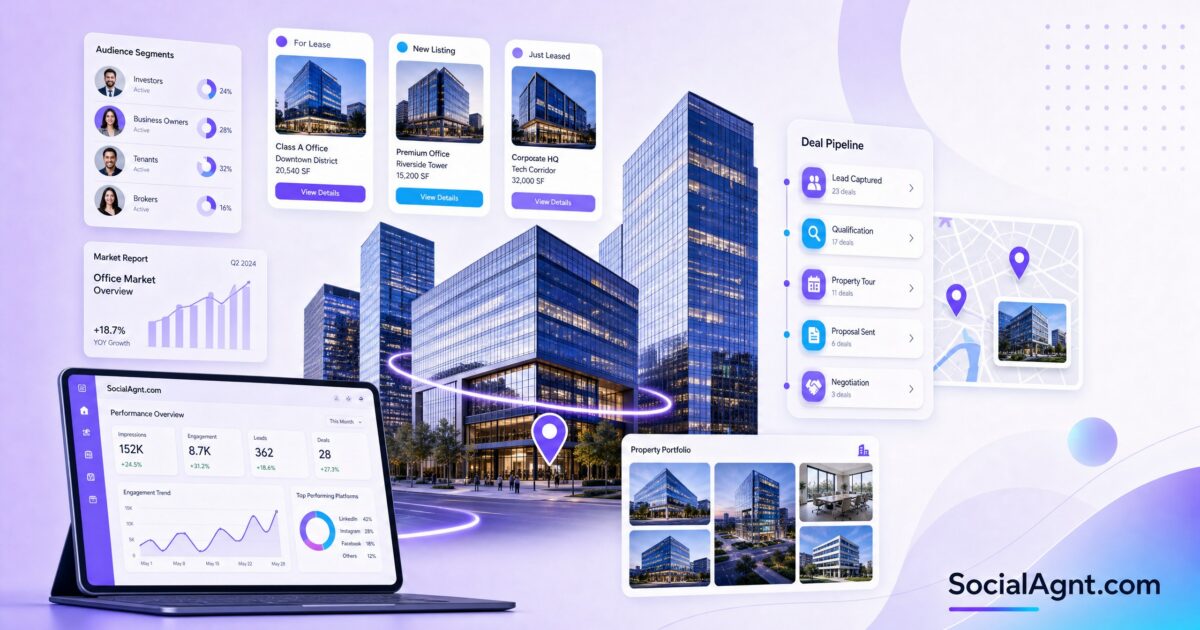
Key Takeaways: Commercial real estate social media marketing is fundamentally different from residential — the audience is business owners, investors, and corporate decision-makers, not homebuyers. The content needs to speak the language of cap rates, NOI, lease structures, and investment returns rather than curb appeal and school districts. The platforms that matter are LinkedIn and YouTube more than Instagram and TikTok. And the sales cycle is measured in months or years, not weeks. This guide covers the specific strategies that work for commercial real estate professionals on social media: the right platforms, content types that attract business clients, lead generation approaches, and how to position yourself as the authority in your commercial market.
Why Commercial Real Estate Needs a Different Social Media Approach
Residential real estate social media is emotional. People dream about their next home. They save listing photos, imagine their kids in the backyard, picture their furniture in the living room. The content that works in residential appeals to emotion, aspiration, and lifestyle.
Commercial real estate is analytical. Business owners are looking at cash flow projections, location demographics, traffic counts, and lease comparables. Investors evaluate cap rates, NOI, vacancy rates, and market appreciation trends. Corporate tenants assess buildout costs, parking ratios, and proximity to workforce. The content that works in commercial appeals to logic, data, and return on investment.
This difference in buyer psychology means commercial agents need to create content that’s substantially different from what residential agents post. Listing photos of office buildings don’t generate the same emotional response as photos of beautiful homes. Instead, commercial content needs to lead with data, analysis, and market intelligence — positioned in a way that helps decision-makers evaluate opportunities and make informed choices.
Platform Strategy for Commercial Real Estate
LinkedIn: Your Primary Platform
LinkedIn is far and away the most important social media platform for commercial real estate. The platform’s user base consists of business owners, executives, investors, and professionals — exactly the decision-makers who lease office space, purchase retail properties, invest in multifamily, and develop industrial assets. Content that demonstrates market expertise, investment analysis, and commercial real estate trends performs exceptionally well on LinkedIn.
Your LinkedIn strategy should center on: data-driven market reports for your commercial market (vacancy rates, lease rates, absorption, cap rate trends), investment analysis content that helps investors evaluate opportunities, case studies of successful transactions (with permission) that demonstrate your expertise, commentary on economic and policy developments that affect commercial real estate (zoning changes, infrastructure projects, tax incentives), and thought leadership about industry trends (remote work’s impact on office demand, e-commerce’s impact on industrial, demographic shifts affecting retail).
YouTube: Long-Form Authority Building
YouTube is the second most valuable platform for commercial real estate because it allows the depth that commercial content requires. A two-minute Instagram Reel can’t adequately explain a 1031 exchange strategy or analyze the investment potential of a multifamily property in a specific submarket. A ten-minute YouTube video can.
Create content for YouTube that targets search queries commercial real estate prospects actually use: “Is [city] a good market for commercial real estate investment?” “How to evaluate a multifamily property” “Office space for rent in [city]” “[City] commercial real estate market update.” These search-optimized videos generate qualified traffic for months or years after publication.
Instagram: Visual Portfolio and Awareness
Instagram plays a supporting role in commercial real estate — it’s where you maintain visibility and showcase your activity, but it’s less likely to generate direct commercial leads than LinkedIn or YouTube. Use Instagram to post property photography that showcases your listings (professional photography is essential), behind-the-scenes of your commercial transactions, short market commentary Reels that can also be shared to LinkedIn, and personal brand content that humanizes you beyond the numbers.
Facebook: Groups and Targeted Advertising
Facebook’s most valuable commercial real estate application is Groups and paid advertising. Join or create groups related to commercial real estate investing, business ownership in your market, and local commercial development. Facebook’s advertising platform also allows targeting by business ownership, job title, and industry — useful for reaching specific commercial tenant profiles.
Content Types That Work in Commercial Real Estate
Market Intelligence Reports
Quarterly or monthly market reports are the cornerstone of commercial real estate social media content. Break down the key metrics for your market: average cap rates by property type, vacancy rates and absorption trends, lease rate trends (per square foot), notable transactions and development projects, and economic indicators that predict future commercial activity. Present these reports as LinkedIn carousel posts (PDF documents), YouTube video analyses, and downloadable lead magnets (email-gated PDFs).
Investment Analysis Content
Content that helps investors evaluate opportunities establishes your authority and attracts qualified leads. Topics include: how to calculate cap rate and why it matters, understanding NOI and cash-on-cash returns, 1031 exchange strategies and timelines, comparing commercial property types as investments (multifamily vs. retail vs. industrial vs. office), and market-specific investment opportunities with your analysis of risk and return.
Property Showcase Content
Commercial listing content should lead with investment metrics and business value, not aesthetics. A commercial listing post should highlight: property type and size, location and traffic/demographic data, current or projected NOI, cap rate at asking price, lease structure and tenant information (if applicable), and investment highlights and value-add potential. Pair this data with professional photography and video tours that show the property’s condition, layout, and location context.
Tenant and Business Owner Content
If you work with commercial tenants (office leasing, retail leasing), create content that addresses their concerns: how to evaluate commercial lease terms, understanding NNN vs. gross vs. modified gross leases, what to look for in a retail location (traffic counts, co-tenancy, demographics), how to negotiate tenant improvement allowances, and timing considerations for commercial lease renewals. This content attracts business owners and corporate decision-makers who are in the market for space.
SocialAgnt helps commercial real estate professionals maintain a consistent presence across LinkedIn, YouTube, Instagram, Facebook, and Google Business Profile. Schedule market reports, listing content, and thought leadership from one dashboard. Start free today.
Lead Generation in Commercial Real Estate Social Media
Content-to-Consultation Pipeline
The commercial lead generation path typically follows this sequence: a prospect discovers your content (a market report, an investment analysis, a listing), they consume multiple pieces of your content over weeks or months (building trust and evaluating your expertise), they engage directly (a LinkedIn comment, a DM, or a website visit), and eventually they reach out for a specific need (they’re looking for investment property, they need to lease space, or they want to sell a commercial asset).
This pipeline is longer than residential because commercial decisions involve larger dollar amounts, more stakeholders, and more analysis. Your social media strategy needs to account for this longer timeline by creating enough content to sustain engagement over months and by nurturing leads through consistent, valuable communication.
Lead Magnets for Commercial Real Estate
Effective lead magnets in commercial real estate include: quarterly market reports (the most effective because investors want current data), investment property evaluation checklists, guide to 1031 exchanges, submarket analysis reports for specific areas, and cap rate surveys by property type and location. Promote these lead magnets on LinkedIn and through your content, collecting email addresses that flow into a CRM-based nurture system.
LinkedIn Direct Outreach
LinkedIn’s search and messaging tools allow targeted outreach to potential commercial clients — but the approach must be value-first, not sales-first. When connecting with a business owner who might need office space, send a personalized connection request referencing something specific about their business. After connecting, share a relevant piece of content (a market report for their area, an article about lease negotiation). Only after establishing value do you suggest a conversation about their real estate needs. This patient, value-driven approach converts at a much higher rate than cold pitching.
Building Your Commercial Real Estate Social Media Presence
Month 1: Optimize your LinkedIn profile with commercial-specific keywords, a professional headshot, and a clear value proposition. Start publishing two LinkedIn posts per week (one market analysis, one educational). Create your first market report lead magnet.
Month 2: Launch your YouTube channel with your first three videos: a market overview, an investment analysis tutorial, and a property tour. Continue LinkedIn publishing. Begin strategic connection requests to potential clients and referral partners.
Month 3: Add Instagram to your mix for listing showcases and behind-the-scenes content. Begin DM conversations with engaged LinkedIn connections. Create your second lead magnet (investment checklist or submarket guide). Evaluate your first quarter’s performance and adjust.
Commercial real estate social media marketing rewards patience, expertise, and consistency. The agents who show up with genuinely valuable market intelligence, investment insights, and professional credibility build pipelines that generate significant transaction volume over time. The investment in content creation pays dividends that compound with every piece of analysis, every market report, and every thought leadership post you publish.
SocialAgnt helps commercial real estate professionals schedule content across LinkedIn, YouTube, Instagram, Facebook, and Google Business Profile from one platform. AI-powered captions and multi-platform scheduling keep you visible to investors, tenants, and business owners. Start your free account today.
Ready to save 5+ hours per week on social media?
SocialAgnt helps real estate agents schedule posts, create AI content, and grow their brand across 7 platforms. Try it free for 14 days.
